Write a captivating title.
Write a captivating title.

- THE TUFO CITIES
SOVANA
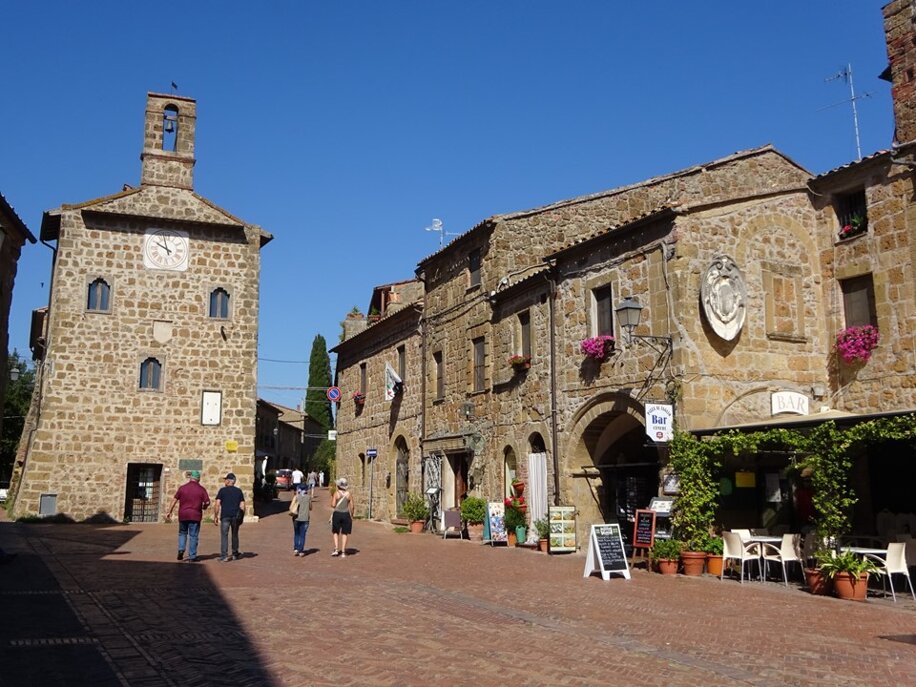
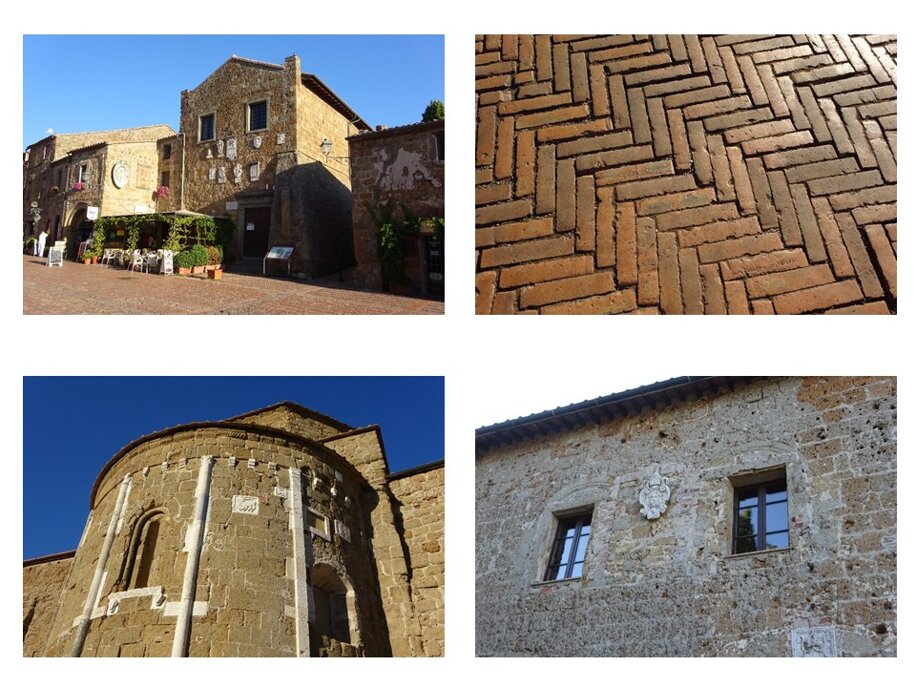
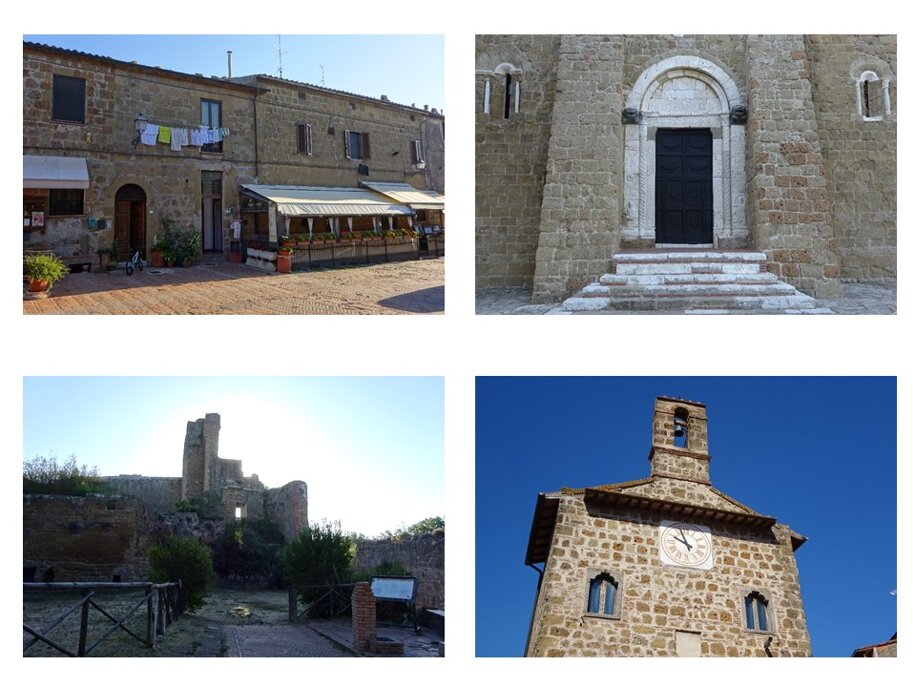
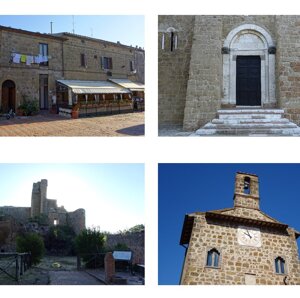
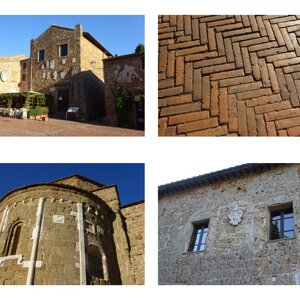
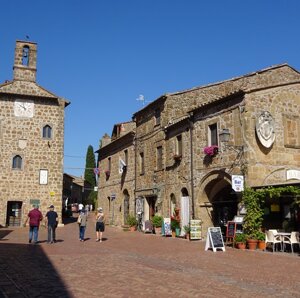
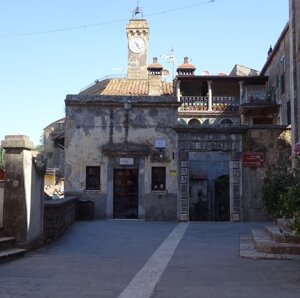
The visitor is welcomed in this small village by the grand Aldobrandesca Fortress, right here begins the main street of the town, paved with herringbone bricks along which one-story medieval houses are lined up. The street widens into the Pretorio Square adorned on the facade with stone coats of arms, next to it is the Captain's Loggia with an arched portico and a large Medici coat of arms in marble. On the left, the ancient church of San Massimiliano built on the remains of a Roman building now houses the San Massimiliano Museum rich in archaeological finds. A three-arched portico marks the Bourbon del Monte Palace, then the church of Santa Maria Maggiore and at the end of the square the Archive Palace. Further on we find the Cathedral, a building of Romanesque structure.
The countryside around Sovana is dotted with necropolises in hard-to-reach places and immersed in the woods, the Città del Tufo Archaeological Park has been established to enhance these exceptional examples of rock architecture.
The oldest necropolises are characterized by simple box tombs or single-chamber tombs carved into the tuff.
Of particular interest are the necropolis of Poggio Felceto where you can find the Ildebranda tomb named after the illustrious citizen of Sovana, then the Pola tomb, the necropolis of Poggio Stanziale, that of Monte Rosello where we find the Silenus tomb.
Among the wines there is the Sovana Doc which pairs well with traditional Tuscan dishes.
PITIGLIANO
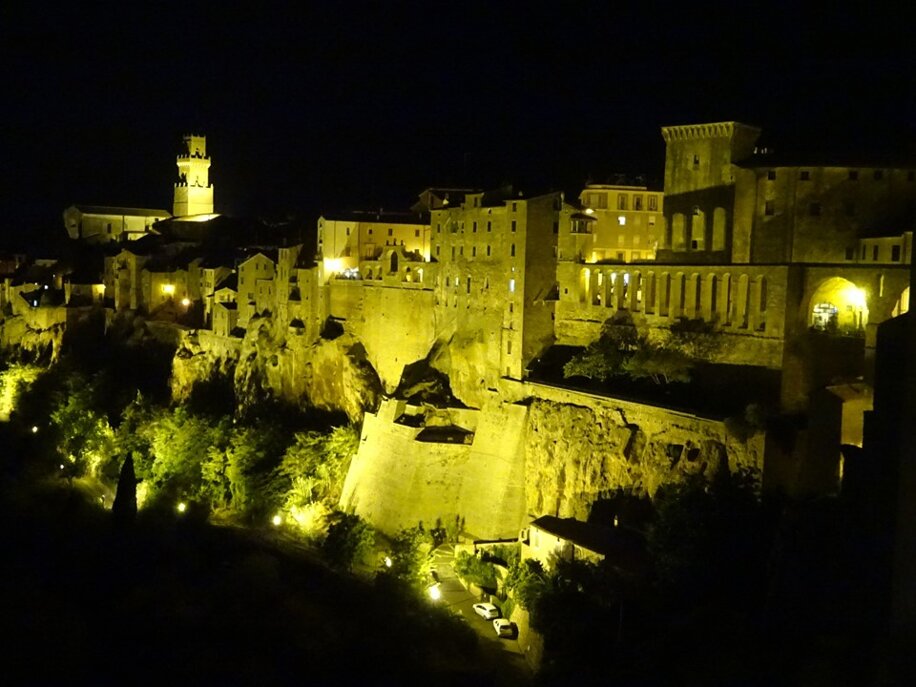
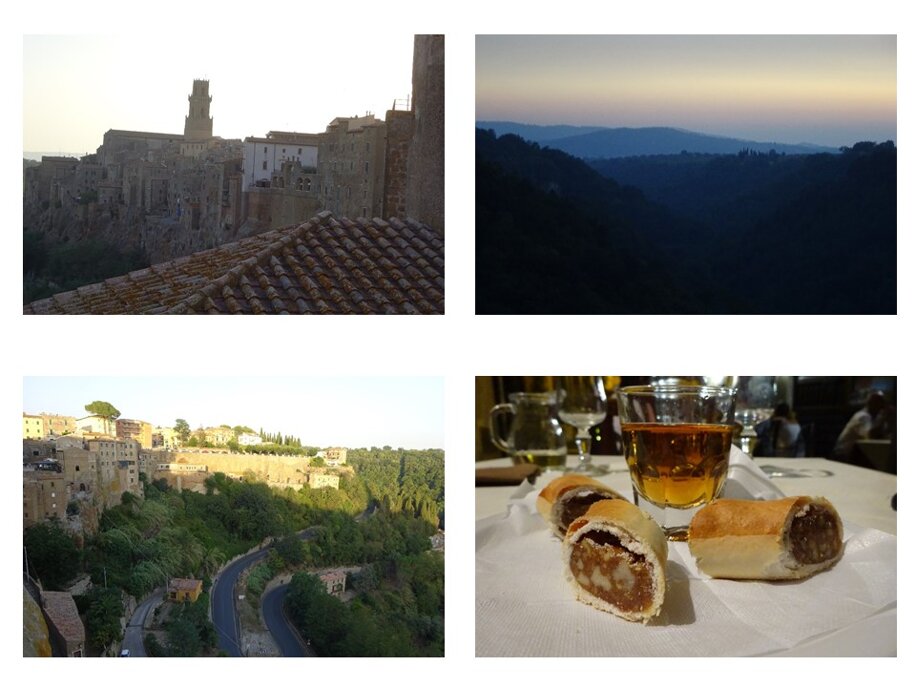
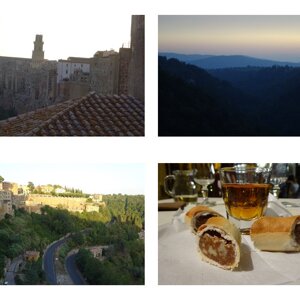
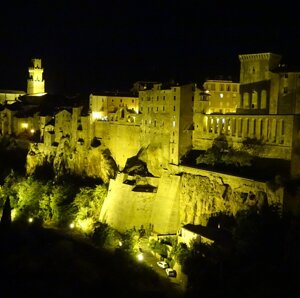
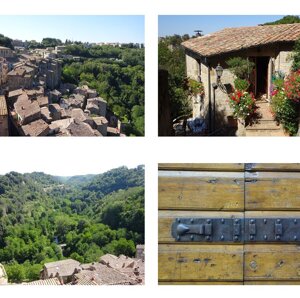
Pitigliano is a magical place; from the very first glimpse from the road, it evokes a special emotion and charm, set on a tuff cliff where the houses are lined up along the edge of the precipice, overhanging, they seem literally carved into the rock.
The main settlement develops along three almost parallel streets, connected by a dense road network.
SORANO
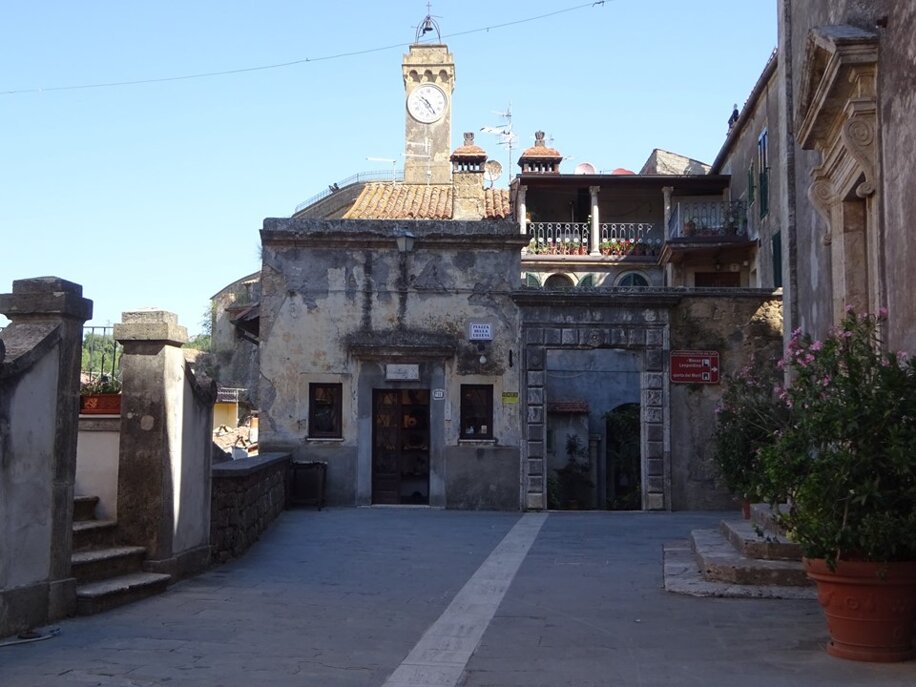
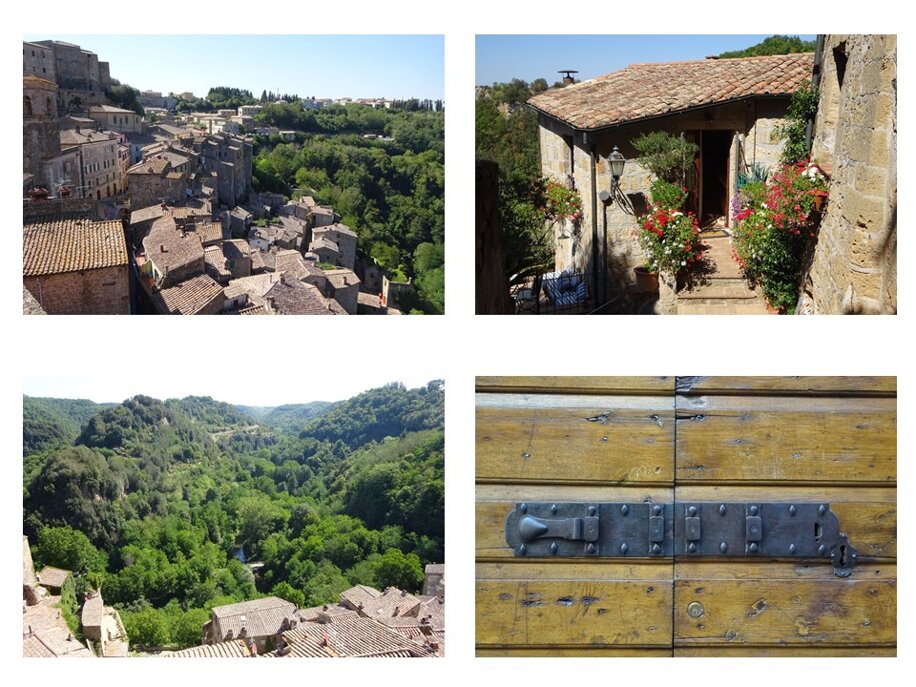
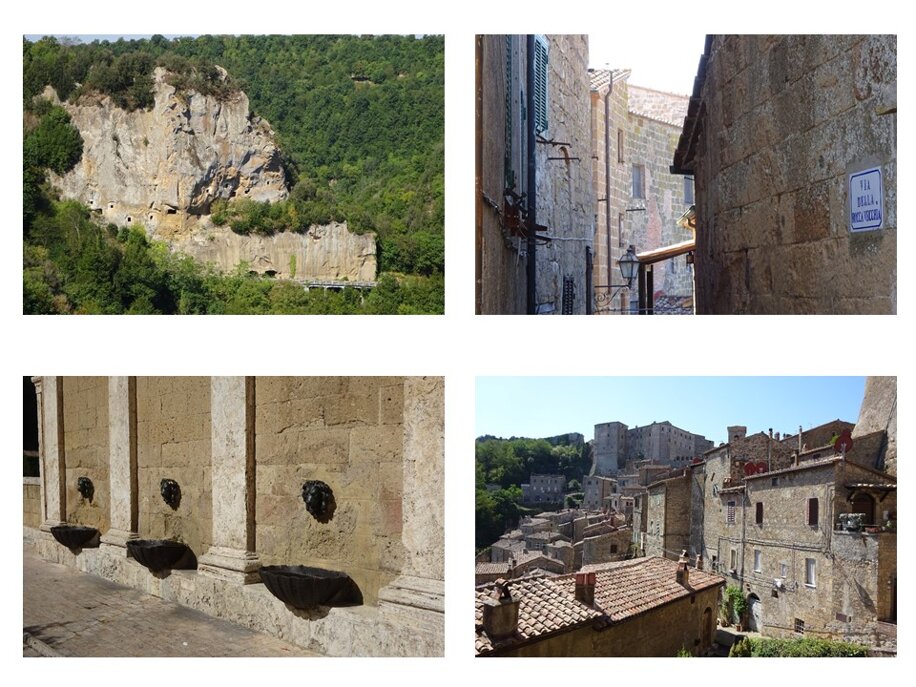
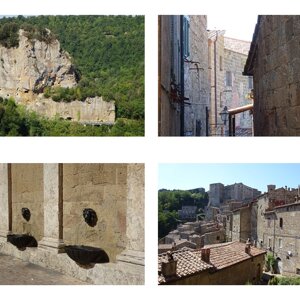
It is a very ancient city that develops along the tuff spur overlooking the Lente valley. The village has a medieval layout, following the morphology of the cliff, full of steep alleys, tunnels, and stairways where the ancient houses overlook.
The village is accessed from the Porta di Sopra and you reach the open space of the Collegiata di San Nicola. Right next to it, a rusticated portal leads into a courtyard where we find the remains of the Palazzo comitale, which was the residence of the lords until the construction of the Rocca.
Behind is the Sasso Leopoldino, beneath which lies the district of the Rocca Vecchia, the oldest in the town, where we find rustic stone and tuff tower-houses, sometimes wedged into the rock.
The grandiose Fortress dominates the village from the southernmost edge, a complex example of Renaissance military architecture which can be reached via Via San Quirico. Today, the Fortress houses the Museum of the Middle Ages and the Renaissance.
The countryside around the village, thanks to the climatic conditions and the particular composition of the soils in the area, is well suited to the cultivation of beans. The most renowned and sought after is the cannellini bean, as well as the dwarf borlotti and the ciavattone. The ham is also highly appreciated.
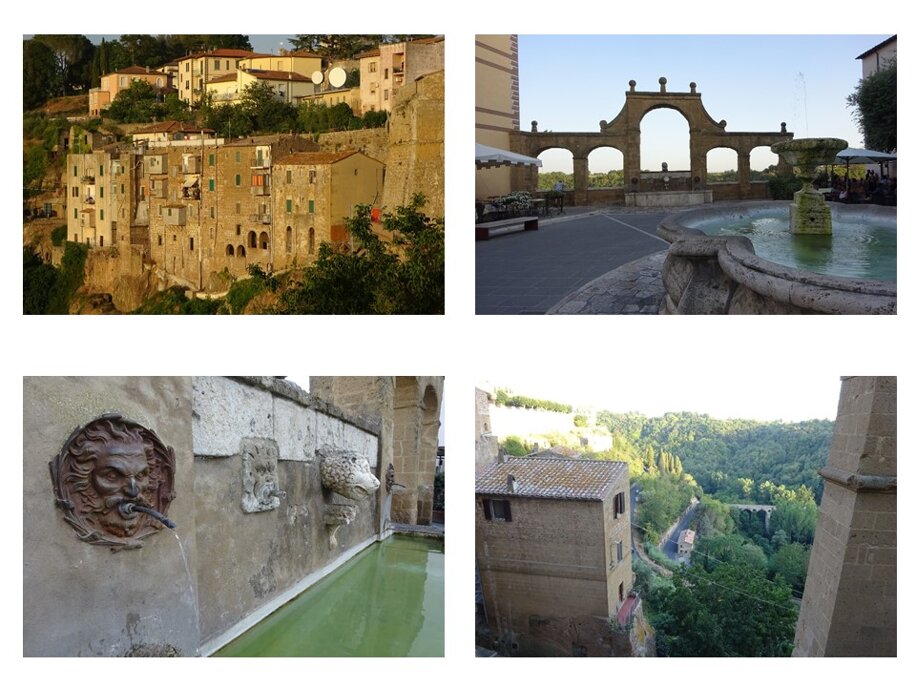
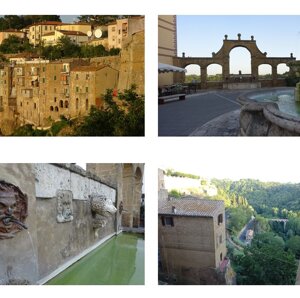
You enter the historic center through the large rusticated portal adorned with the coat of arms of the Orsini which rises in Piazza Petruccioli, dominated by the sixteenth-century bastions. After passing through the arch, you reach Piazza della Cittadella, now Garibaldi, from which you continue along Via Cavour, built in the 19th century to connect this square with that of the fortress. The street is flanked by two colossal arches and another 13 smaller ones of the scenic aqueduct built in 1543-45 by Gian Francesco Orsini based on a design by Antonio da Sangallo.
You then emerge into Piazza della Repubblica, adorned with two fountains and dominated by the vast Palazzo Orsini. Through the portal you enter the medieval-looking courtyard, and by a ramp you ascend to the harmonious little square of the comital palace, Renaissance in character.
Inside are the Museum of Palazzo Orsini and the Civic Archaeological Museum of Etruscan Civilization.
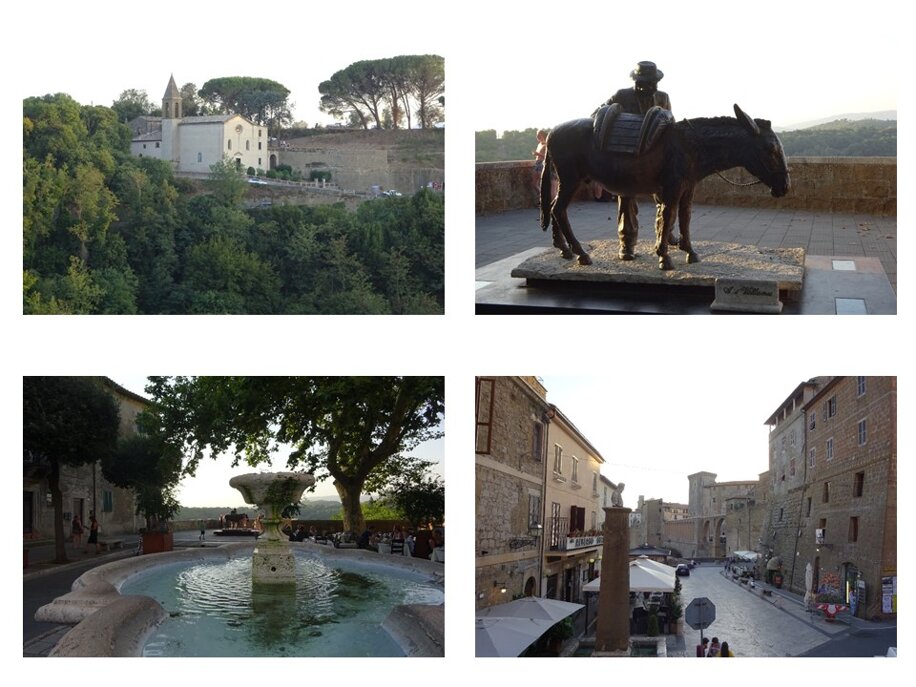
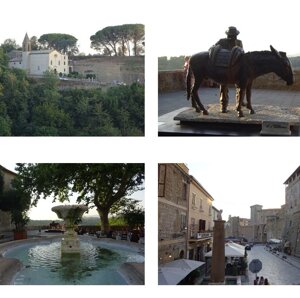
From Piazza della Repubblica, continue along Via Roma, the main street or Corso, the main artery of the medieval village. The street ends in Piazza Gregorio VII, at the end of which is the monument to the Orsini lineage, surmounted by the bear, emblem of the family. The Cathedral dedicated to Saints Peter and Paul has a powerful three-tiered bell tower.
The Capisotto district, together with the Ghetto, is the oldest district. Walking along Via Generale Orsini, you notice the irregularity of the urban layout characterized by narrow overhanging alleys and steep stairways leading to the houses. The district is centered around the church of S. Maria.
Continue along Via degli Aldobrandeschi, into which, among others, opens the Vicolo della Battaglia, one of the most characteristic for its numerous external staircases, then to the right along Via di Porta Sovana which ends in the rustic Piazzetta Becherini overlooking the Meleta valley, offering a wide panorama. On the right, a staircase descends to the Porta di Capisotto or di Sovana in which is incorporated a stretch of wall in tuff blocks, the only visible remnant of the Etruscan city.
Within the Ghetto district, there are numerous historic buildings including the Synagogue; also remaining are the ancient kosher slaughterhouse, the oven for unleavened bread, used for baking sweets and unleavened bread, the dyehouse or tannery with working vats, the cellar with the bases for the barrels.
Walking through the streets of the center you will find numerous bakeries and food shops where you can buy various local specialties including sweet and savory focaccia, migliaccia and sfratto. Among the wines there is a DOC, the Bianco di Pitigliano, a straw-yellow colored wine, excellent as an aperitif or accompanied by fish dishes.
REAL ESTATE OFFICE
Francesco Di Meo
ROME OFFICE - VIA DEI CORAZZIERI 76
REAL ESTATE SPECIALIST ROME
REAL ESTATE SPECIALIST MILAN
CONTACTS
+393398047932
Email: frdimeo.re@gmail.com